(Flat Time House event September 2018, Hester Reeve)
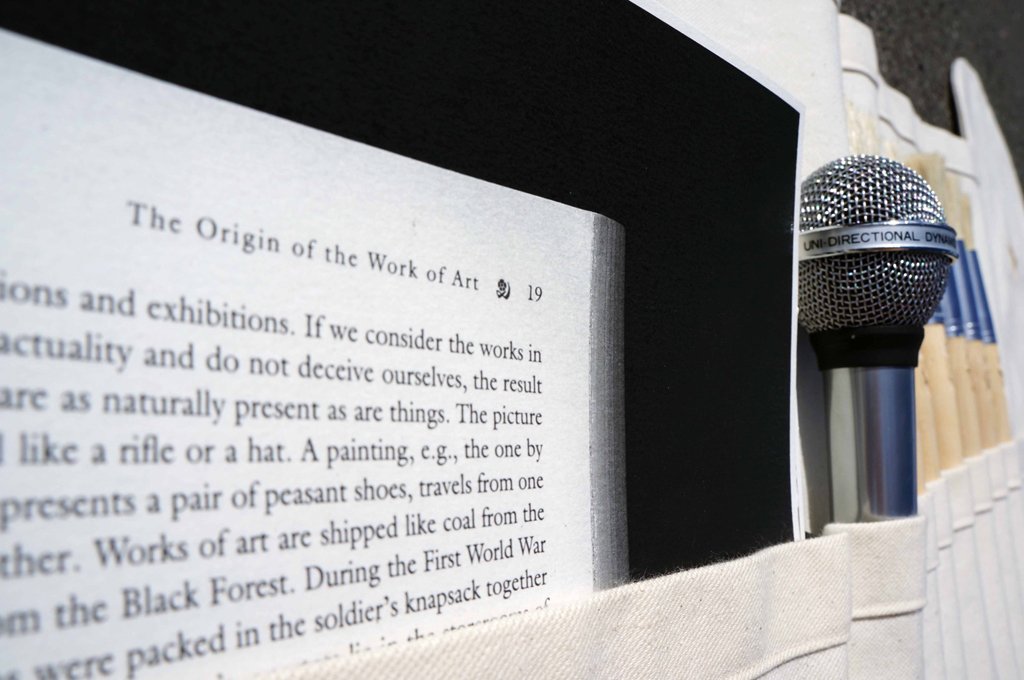
I am one of those people who feels (fantasises?) that they are not at home in the world. Reading certain types of philosophy, and in this case Heidegger’s text, makes me feel at home – as an artist – maybe more than being in a gallery and looking at art work. This links to my interest in a practice of thinking as a type of creativity linked to consciously/care-fully existing. Art is to do with such a practice too (at least for me) but that aspect of it is easily covered over with the joy of material making and the inevitable and more tangible influences of personal desire and forces of taste and fashions which are also at play in an art work’s creation.
I found myself starting to make something as I prepared my outline for what I wanted to say today, I don’t find communicating my thinking via the logic of sentences very easy so I have brought it in (and, for all my perambulatory musings, I am ultimately after physical artworks but I want them to somehow smell of the thinking). The template is an artist’s roll up brush-tool case but here it is reconfigured to suggest an execution of what I call ‘artist substance’ rather than a traditional painting. I consider myself fundamentally to be a painter even though I haven’t put paint on canvas since I was a student. This consideration is really at a boiling point in my practice right now; I have found myself incorporating the ‘signs’ of a painting practice rather than painting per se in many of my 3D works.
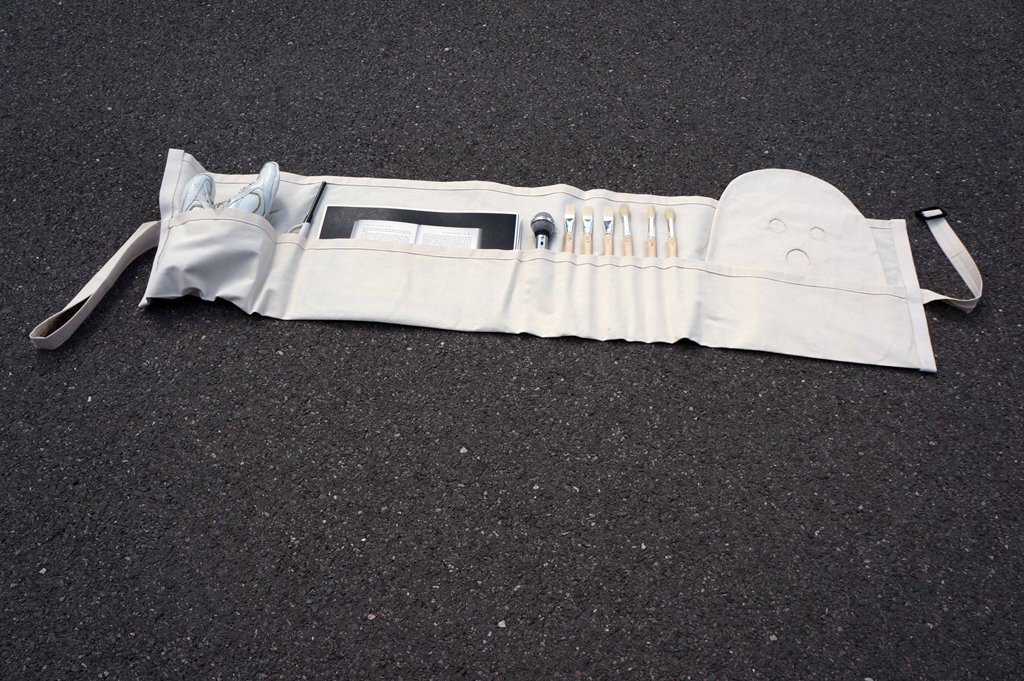
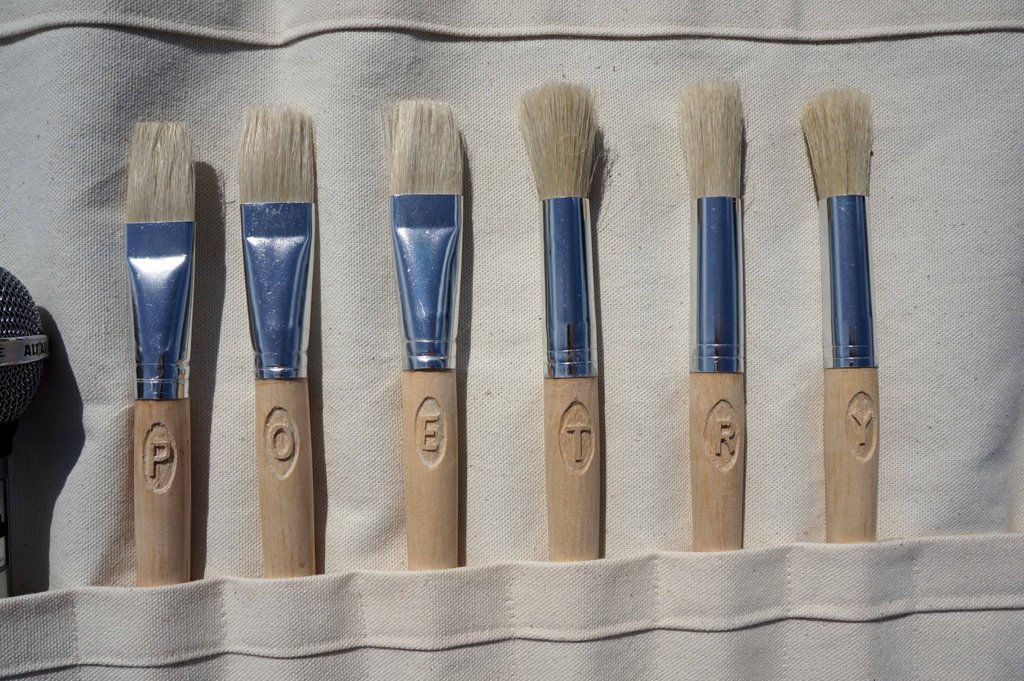
Some of my investment in OWA relates to my interest in the relationship between art and philosophy – both the historical tensions and the more open possibilities of today’s era where we might consider an excess of either discipline where, at their extreme risks, they may be after similar things (un-nameable and incomprehensible as such things will ever remain to us). Heidegger’s text is one of the few I have read that is so deeply committed to this excess of art and philosophy without ever assuming the conceit of determining what art is exactly (ultimately only art can speak of art). Heidegger holds out a faith in something exciting but also messy and complex to today’s culture and thinking about art – i.e. an art fundamentally linked to ‘structures of living,’ a transporting experience, the seed of which is not the relational or contextual (i.e. the priorities of much theory and artistic activity today) – though without such relations there would be no actual art objects of course – but something ‘unfashionably’ non-relational where ‘truth’ is at work in the work via ontological forces (which may result in reinvigorating relationships and contexts). The penultimate statement of the essay after many roundabouts of enquiry – all of which importantly peel back the enframing habits of thought and culture to which we are all habituated – is the ‘announcement’ that at its essence Art (with a capital A) is an origin, and, as such, all art is fundamentally poetry, that is the naming-announcing (projective saying via projection in the clearing) things in tandem with a care for thusness (why is there something rather than nothing?) and it is this that allows for phenomenal beginnings, be it of an object or a type of cultural space. As such – and putting to one side the problematic of Heidegger’s term ‘great art’ (not to mention his over bearing nature apparent to many readers of the text in German) – his very essay is, to my mind, an artwork in that he has arranged his words to put the (committed) reader through an “experience of thinking” rather than the conveyance of thought or knowledge; language and argument are used to ‘shape’ an interface with a sensation of ontological force, not simply philosophical argument. In this light, the essay itself is, in certain parts, a projective saying: “Projective saying is poetry: the saying of the world and earth…Projective saying is saying which, in preparing the sayable, simultaneously brings the unsayable as such into a world.” No surprise the essay is obtuse and confounding, Heidegger is not trying to communicate information or even prove anything; he is stirring our capacity as producers and preservers of Art. Perhaps most significant for my practice is that the overarching context for all this is not culture, the context is living in the realisation ‘that there is existence at all.’
Not only is this a relief to me – since this level of thinking art (as opposed to thinking about art) and the equating of artworks with broader philosophical-ontological horizons is exciting to me as a ‘maker’ – but it is also rare to see such a crossover between the disciplines held within a philosopher’s text. At heart this is what is at stake for me – this beyond of art and philosophy as an impossibility that nonetheless excites art to realise its philosophical prowess and philosophy to realise its artistic powers.
That said, one of the problems I have with OWA is the issue of the artist’s role and this relates more directly to this roll up brush-tool case here and aspects of my current thoughts and practice as an artist: I agree with everything Heidegger says about the artist’s role and that she is a ‘passageway that gets used up’ and that ‘createdness’ – so important to Art presencing – stands alone from the artist because it is inherent in the material presence/energetic structure of the artwork and it is this which ‘speaks art’ and not the artist per se.* But the artist’s role is only mentioned three times and in brevity. Given Heidegger claims at the start of the essay that perhaps it is Art that is the origin of the artist (as opposed to the other way around as assumed by habitual thought), there is something reductionist and dualistic about not incorporating a more committed analysis of the artist’s role qua Dasein and the value of the art originating process back on Dasein’s capacity for authentic dwelling and the releasement of all non-human entities and possibilities in his account of Art. I am not intending the artist as a special case of Dasein, more suggesting that via exploring the artist in-the-work-process we might also be understanding and igniting creative capacities in relationship to Being in any individual human creature.
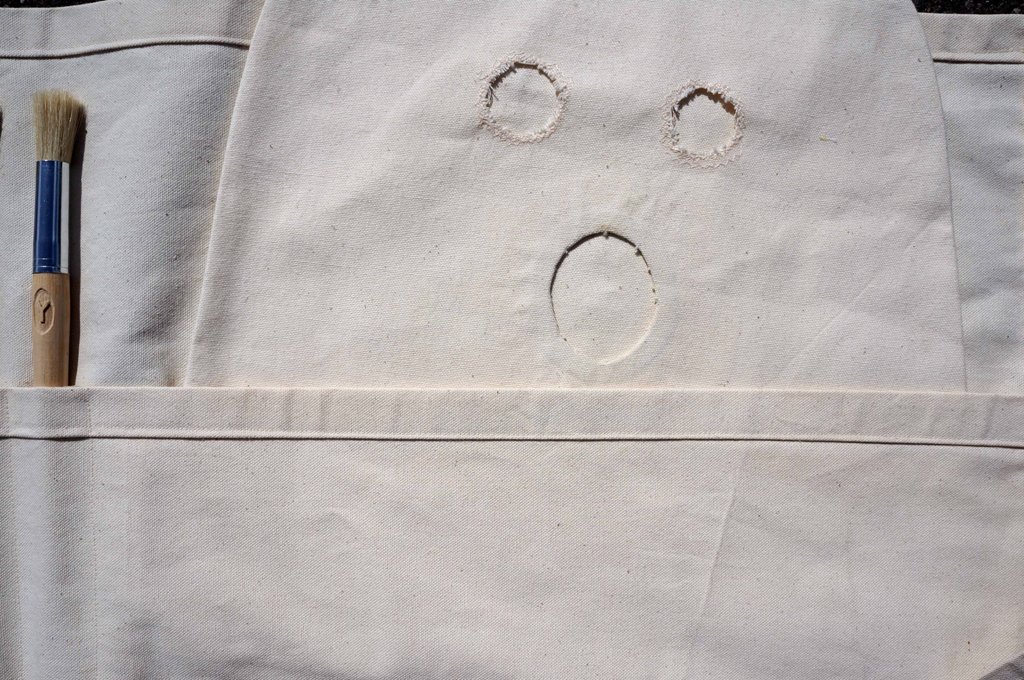
More specific to my own practice as an artist, I have always been caught up (and maybe caught out -it has certainly stopped my producing so many things and mounting exhibitions) by wanting something out of life that isn’t physically there, more specifically a kind of ‘atmosphere of life.’ Opting for an art practice -in particular durational live art – has been the only option available to facilitate that or at least to allow for space and time where my actions and energy can be devoted to this sort of potentiality.
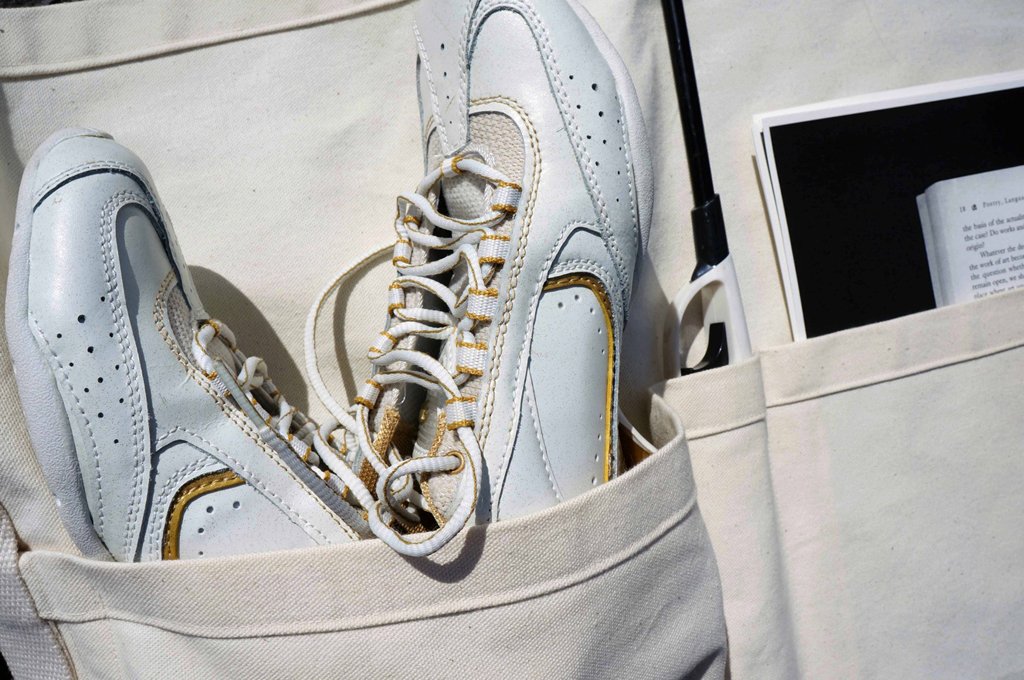
And yet, at heart, I am a painter – what I enjoy most and feel an aptitude for is visual thinking, thinking in the process of making, a felt-intellectual-sensibility as opposed to language-based conceptualisation. I have not followed this, or only in some small private works, because it is so easily mistaken as “self-expression” and I am only just beginning to realise that this is not the case. At the same time, these sorts of complex issues around Art – which engaging with philosophy enables me to exercise – are part of the mix somehow. Mental sculpting is playing a role at some non-directional level. A lot of my recent production is touched by this question and by the realisation that ‘being a painter’ is the very point on some level. This is to recognise not just expanded painting (and in conjunction expanded drawing) but also the richness and radicality of a conscious creature working with the brush and negotiating a bare canvas (that kind of material thinking is really hard and is getting rarer and rarer) and that the value is not just in the objects produced and their effect on the viewer but that the painting process/studio practice is doing something back to the existential capacity of the ‘painter’ (and the plasticity of their brain).
“Painting a face “as an object” is not to strip it of its “thought.” “I agree that the painter must interpret it,” said Cezanne. “The painter is not an imbecile.”… All indications are that animals cannot look at things, cannot penetrate them in expectation of nothing but the truth…” The landscape thinks itself in me,” he would say, “and I am its consciousness”….Cezanne, in his own words, writes in painting what had never yet been painted, and turns it into painting once and for all…Although it is certain that a person’s life does not explain his work, it is equally certain that the two are connected. The truth is that that work to be done called for that life…Maurice Merleau-Ponty, “Cezanne’s Doubt,” 1965
This capacity is something I call ‘artist substance’, and, importantly, you do not have to be a painter or even identify as an artist to have artist substance develop within. Artist substance is carved via ontological forces (in Heideggerian terms as a capacity to heed the call of Being). In such a way, might we speak of the necessity of ontological equipment in the art studio of human existence?
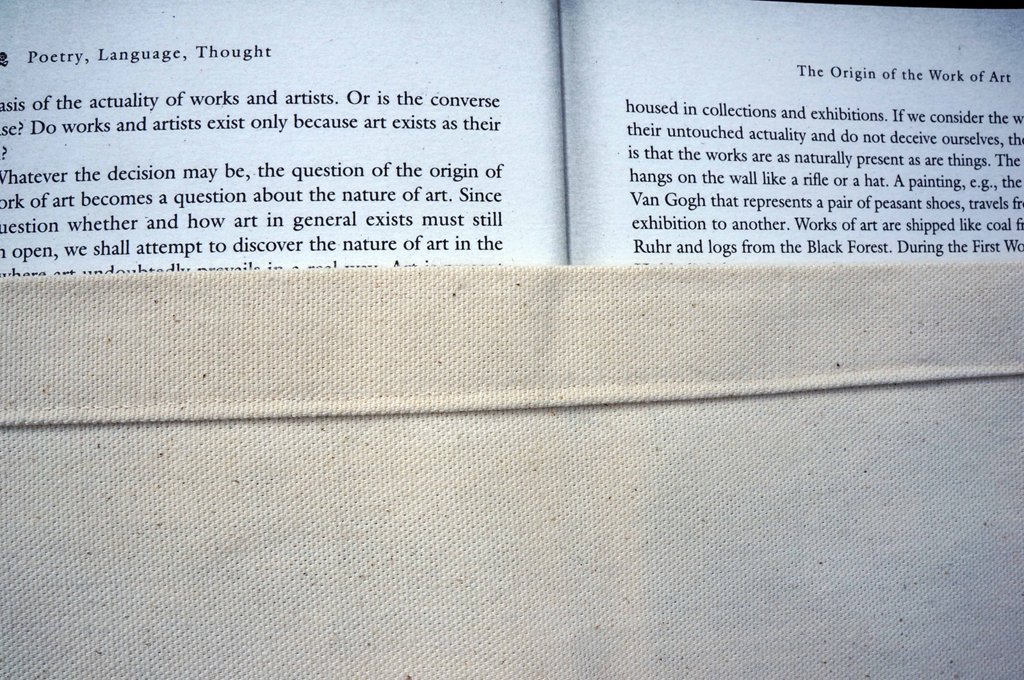
* “Precisely where the artist and the process and the circumstances of the genesis of the work remain unknown, this thrust, this ‘that it is” of createdness, emerges into view most purely from the work.” (p.90 Basic Writings)